Roofing Services in Bonita Springs, FL
Local Roofing Contractor Expertise
Bonita Springs sits on Florida's Gulf Coast where salt air, intense UV heat, and hurricane winds test your roof year-round. A roofing contractor in Bonita Springs, FL must understand local building codes, insurance requirements, and materials that actually survive our coastal climate. Whether you're in Bonita Bay, Barefoot Beach, or downtown near the Imperial River, your roof needs expert care.
This guide covers residential and commercial roof repair, replacement, and storm damage—and what to expect when working with a local roofer who knows your neighborhood.
How Roofing Service Works
From your first call through final inspection, a professional roofing process protects your timeline and your wallet. Below is what happens when you hire a licensed contractor for roof work in Bonita Springs.
Inspection & Assessment
Contractor evaluates roof condition, checks for leaks or damage, and photographs the existing structure. They'll explain findings and recommend repair or replacement.
Material & Permit Planning
Choose materials suited for Florida hurricanes (metal, tile, or impact-resistant shingles). Contractor obtains necessary permits and verifies your homeowners policy covers the work.
Tear-Off & Prep
Old roofing material is removed. Decking is checked for rot or water damage. Work area is protected and debris containment set up for Bonita Springs pickup.
Install & Ventilation Check
New underlayment and roofing material installed per Florida building code. Proper ventilation and flashing ensure long-term protection against coastal humidity.
Final Inspection & Certification
Contractor performs walkthrough. City inspector verifies code compliance. Documentation is provided for your insurance company and home records.
Cleanup & Warranty Info
Job site cleaned and landscaped restored. Contractor explains warranty details, maintenance tips, and how to report issues if they arise.
You'll know exactly what's happening at each step—and get clear answers about your roof investment.
Roofing Services We Provide
Whether you need a full roof replacement, emergency storm repair, or regular maintenance, local roofers handle the unique demands of Bonita Springs roofing.
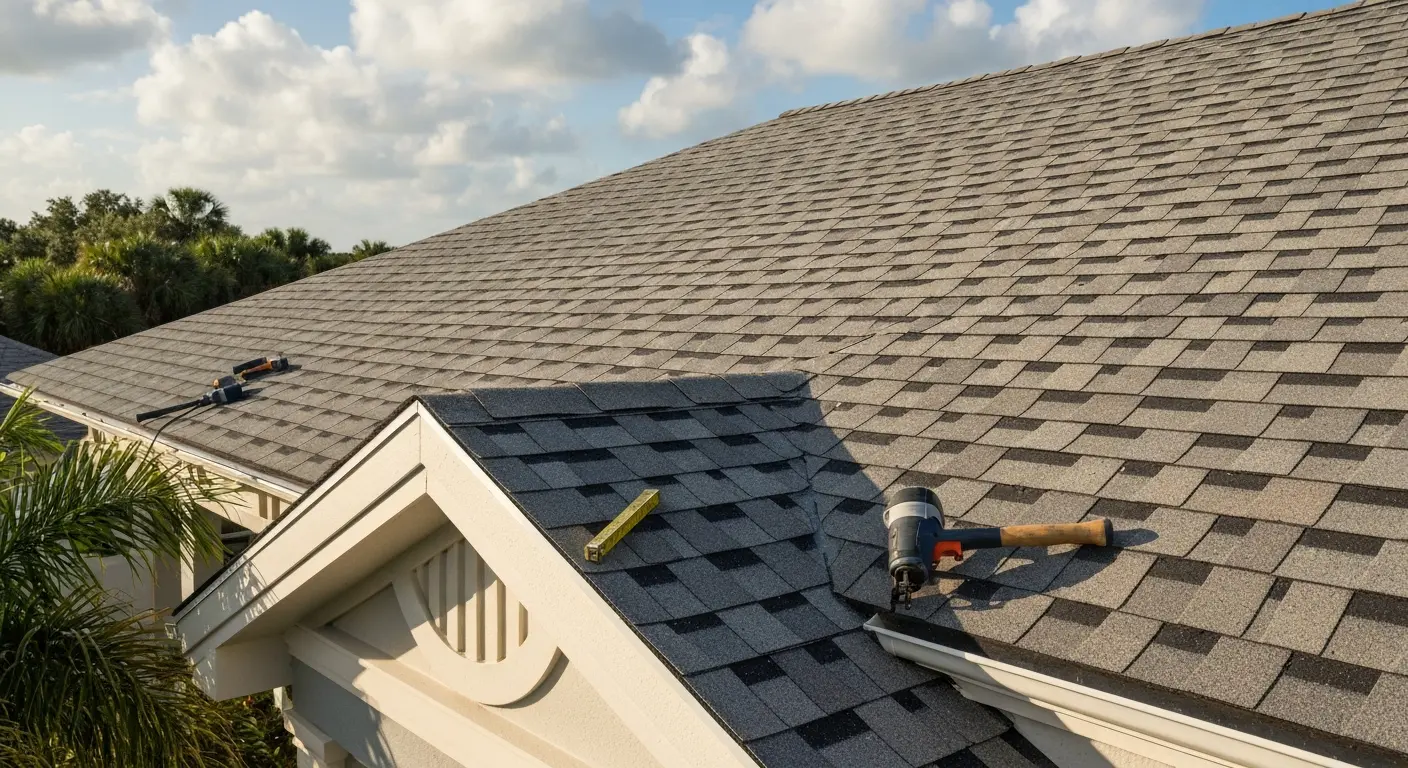
Residential roof installation in Barefoot Beach area with hurricane-rated materials.
Residential Roof Repair & Replacement
Most Bonita Springs homes have roofs older than 15 years. Florida insurance companies often require roof certification. A licensed contractor inspects for wear, leaks, or storm damage and recommends repair or replacement with materials rated for hurricanes.
Common residential materials: asphalt shingles, metal roofing (superior wind resistance), and clay or concrete tile. Gated communities like Bonita Bay, Spanish Wells, and Pelican Landing often have HOA approval requirements.
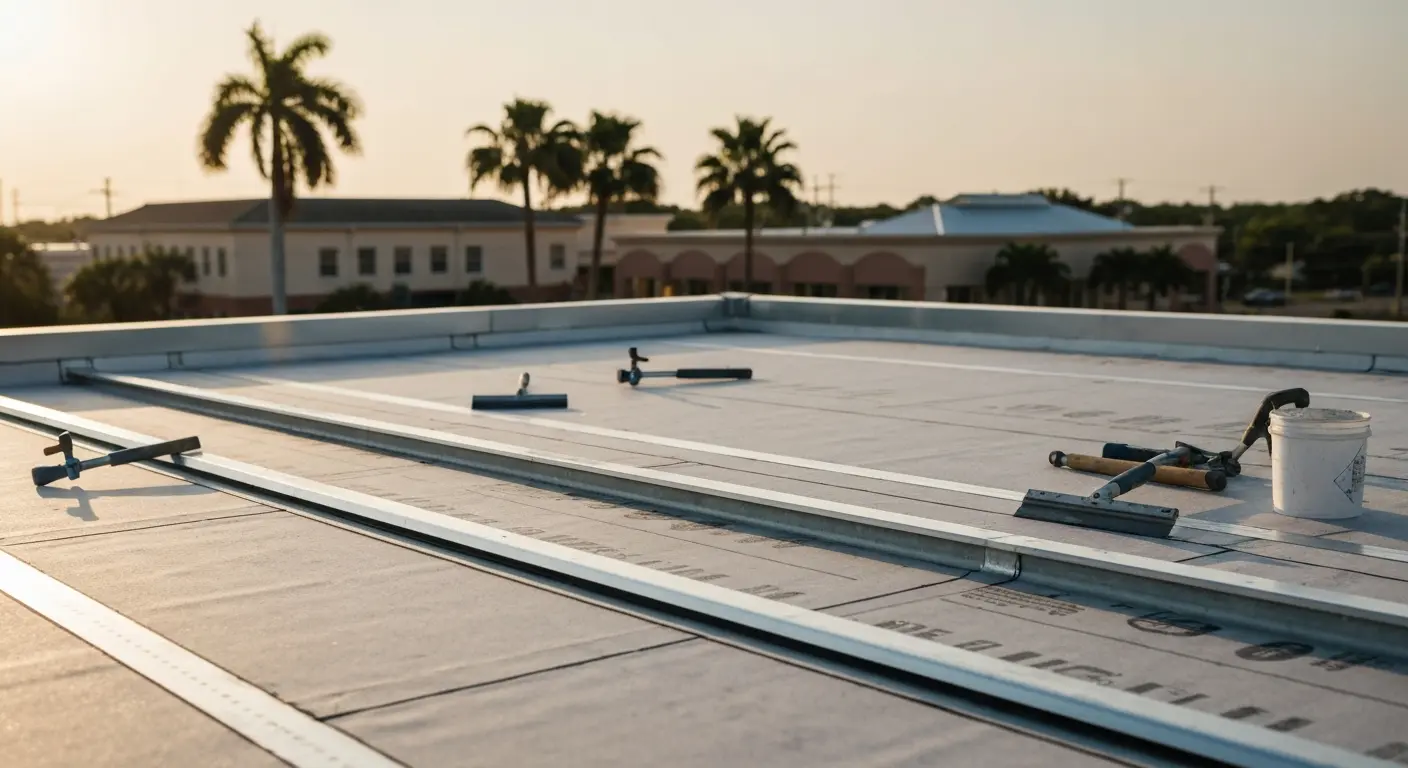
Commercial flat roof maintenance near Riverside Park and Imperial River downtown.
Commercial & Flat Roofing
Office buildings, retail strips, and warehouses in downtown Bonita Springs and along US-41 need flat roof systems that shed water efficiently. TPO, EPDM, and built-up roofing require expertise in ponding water prevention and drainage design.
Regular inspections catch ponding water and seal failures before they cause interior damage or mold. Contractors also handle metal standing-seam roofing for better longevity.
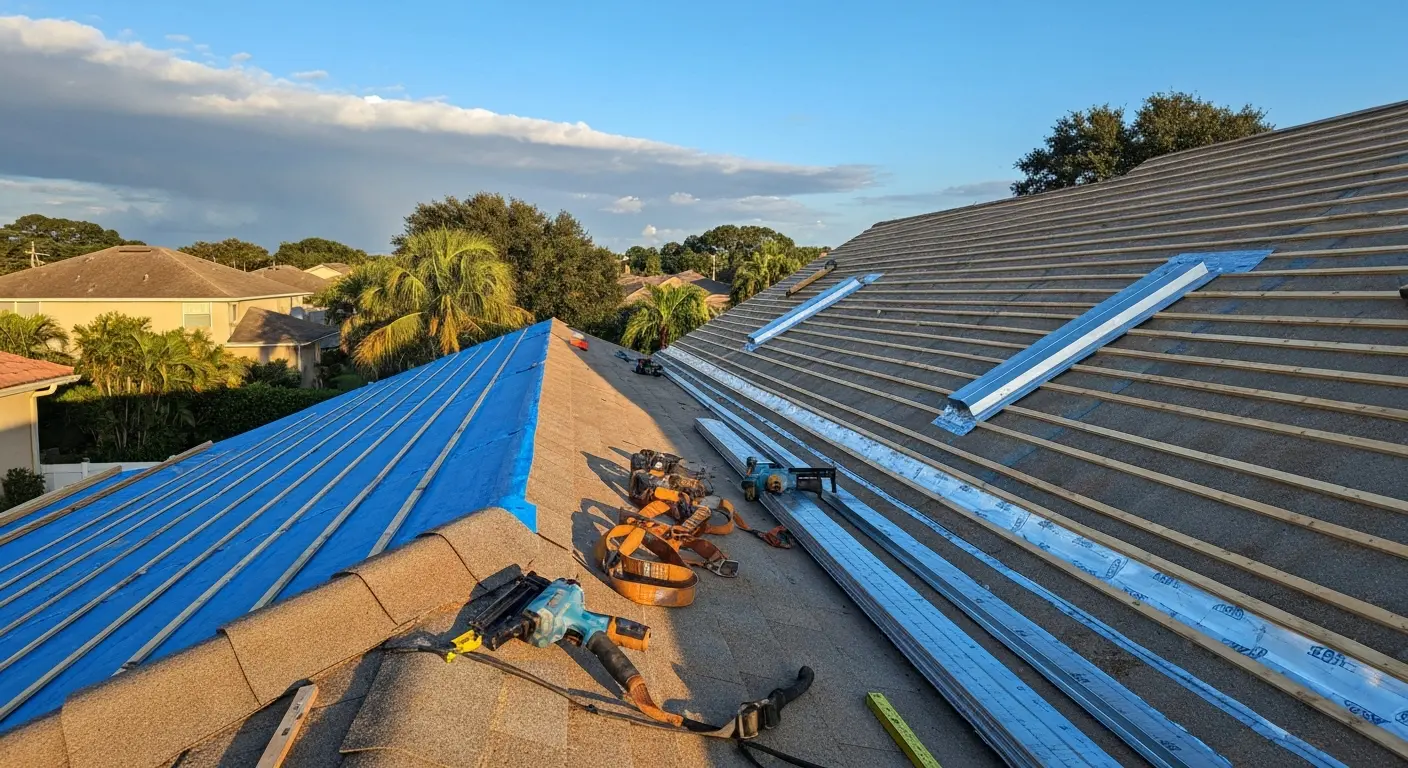
Emergency roof tarp and repairs in Sorrento after coastal storm damage.
Storm Damage & Emergency Repair
Hurricane season runs June–November. Wind, hail, or water intrusion demands immediate attention. Contractors provide emergency tarping, temporary protection, and full restoration with photo documentation for insurance claims.
Many local roofers help navigate insurance deductibles and policy requirements. Your claim is stronger with professional assessment and detailed repair estimates.
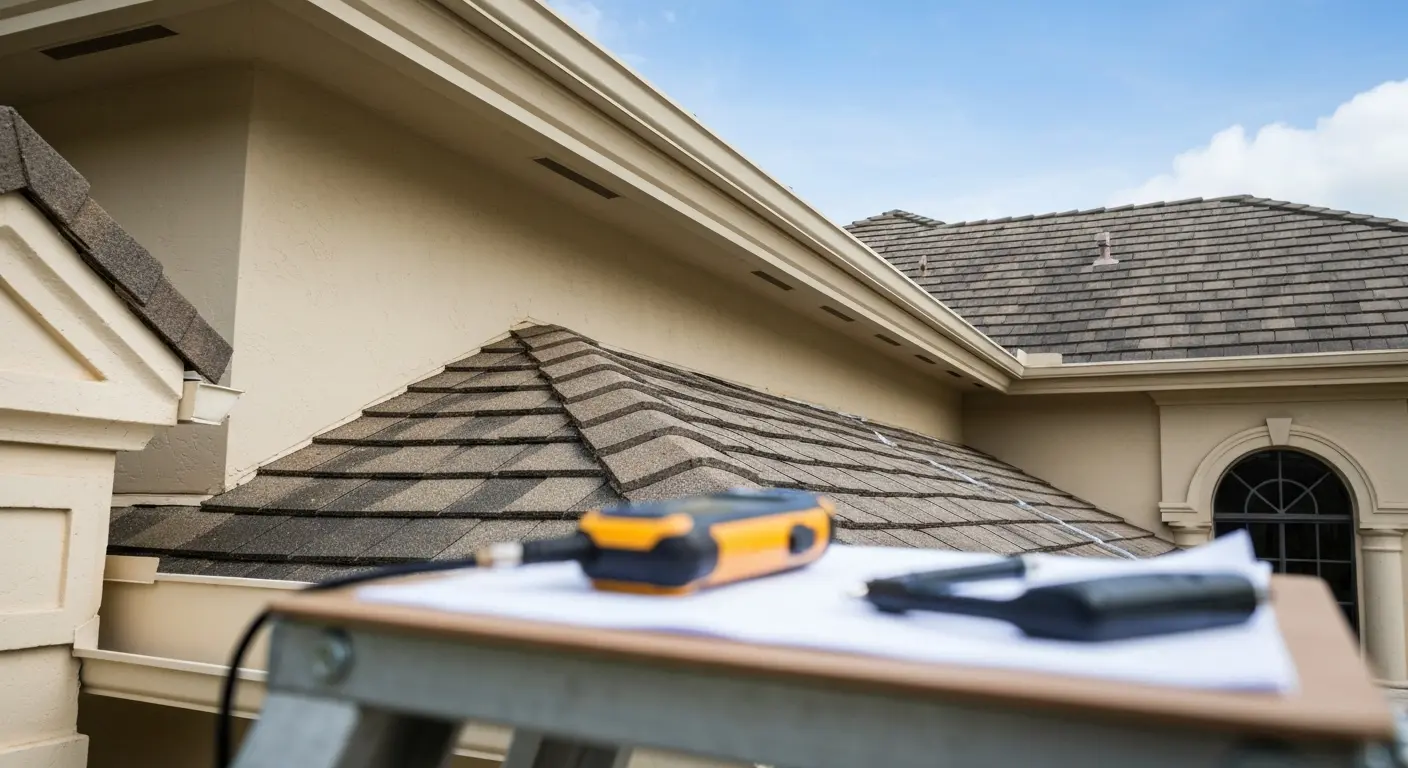
Annual inspection in Highland Woods gated community checks for salt-air corrosion.
Roof Inspections & Maintenance
Bonita Springs' salt air and humidity accelerate roof aging. Annual inspections catch loose shingles, flashing failure, and moss growth before they become expensive problems. Contractors assess ventilation and check gutters for debris.
Maintenance extends roof life and keeps your insurance policy valid. Most policies require proof of recent inspection and good condition.
Why Local Roofing Expertise Matters in Bonita Springs
Bonita Springs isn't like inland Florida. Your roof faces salt spray, intense UV exposure, and predictable hurricane threat. A local contractor understands these pressures and builds roofs to last.
Coastal climate stress: Salt air corrodes metal fasteners. UV rays degrade shingles faster than in other states. Humidity feeds mold and algae growth on tile and metal.
Florida Building Code Compliance
New roofs must meet current Florida code, including hurricane wind speed ratings and roof attachment standards. Your homeowner's insurance may deny claims if code is violated.
Insurance & Deductible Strategy
Local roofers know how to file storm damage claims, negotiate with insurers, and maximize coverage. They handle permits and inspections so you don't have to.
Ventilation Design for Humidity
Proper attic ventilation reduces mold risk and keeps interior temperatures manageable. Coastal humidity is relentless; poor ventilation leads to rot and expensive repairs.
Material Selection for Coastal Living
Metal roofing resists salt corrosion better than shingles. Tile and concrete need proper sealing. Impact-resistant shingles meet insurance discounts and hurricane resilience goals.
Featured Question: Why Do Bonita Springs Roofs Age Faster Than Others?
Bonita Springs roofs experience three constant stressors that accelerate deterioration: (1) salt-laden air from the Gulf of Mexico corrodes metal fasteners and flashing; (2) intense UV radiation from our subtropical sun breaks down shingle asphalt faster than inland Florida; and (3) high humidity and frequent summer rainfall create ideal conditions for algae, mold, and wood rot underneath roofing materials.
- Most roofs last 15–20 years here; inland homes may see 20–25 years.
- Annual inspections catch salt corrosion and moisture issues early.
- Metal and properly sealed tile roofs resist coastal aging better than budget shingles.
That's why choosing a contractor who understands Bonita Springs' environment saves you money and stress long-term.
Bonita Springs Coverage & Local Knowledge
A roofing contractor serving Bonita Springs works across diverse neighborhoods, each with unique layout and code requirements. Knowing these areas helps contractors plan work and navigate HOA rules.
Barefoot Beach & Bonita Shores
Upscale beachfront and near-beach communities with custom homes. High-end materials and strict architectural guidelines. Direct Gulf exposure means more aggressive salt spray.
Bonita Bay & Gated Communities
Master-planned luxury communities with HOA approval requirements. Contractors must follow strict guidelines on materials, colors, and installation schedules to match community standards.
Downtown & Historic Districts
Mixed residential and commercial near Imperial River and Riverside Park. Non-gated neighborhoods like Edenbridge and Heitmans have varied parcel sizes and architectural styles.
Spanish Wells, Highland Woods, & Quail West
Golf communities with bundled memberships. HOA regulations are common; contractors ensure work complies with community building standards and schedule restrictions.
Imperial River & Waterfront Areas
Sorrento, Bonita Farms, and waterfront properties. Access challenges for construction crews. Proximity to water means extra attention to ventilation and moisture management.
South Tamiami Trail Commercial
Retail, offices, and restaurants along US-41. Flat-roof maintenance and TPO systems. Contractors coordinate work hours to minimize business disruption.
Getting a Roofing Contractor to Your Bonita Springs Home
Most roofing companies serving Bonita Springs offer free in-home estimates. Call or request online quotes; contractors schedule inspections at your convenience. If work is urgent (storm damage), many offer same-day tarping and assessment.
Ask your contractor: Are you licensed and insured in Florida? Do you carry workers' comp? Can you provide recent client references from Bonita Springs? How do you handle city permits? Will you coordinate with my insurance company?
Frequently Asked Questions
Does my homeowner's insurance cover roof replacement in Bonita Springs?
It depends on the cause of damage. Hurricanes and wind damage are often covered (minus your deductible). Wear-and-tear is not. Most policies require your roof to be under 15–20 years old. Contact your agent about coverage limits and age requirements before scheduling work.
What roof material is best for Bonita Springs weather?
Metal roofing is superior for salt-air resistance and hurricane wind ratings (up to 160 mph). Properly installed tile or concrete with hurricane straps is also excellent. Impact-resistant asphalt shingles cost less but require more frequent inspection. Your contractor can advise based on budget and roof pitch.
How often should I have my roof inspected in Bonita Springs?
At least annually. Florida's harsh climate—salt spray, UV intensity, humidity—accelerates aging. Also inspect after heavy storms, hurricanes, or hail. Document all inspections for your insurance company, as many policies require recent proof of good condition.
What should I look for in a licensed Bonita Springs roofing contractor?
Verify current Florida contractor's license, general liability insurance, and workers' comp. Ask for references from recent Bonita Springs projects. Confirm they understand HOA rules (for gated communities) and can file insurance claims. Get three written estimates before deciding.
Can I get a roof permit in Bonita Springs?
Yes. Most roof repairs or replacements in Lee County require a building permit. Your contractor handles permit applications and scheduling city inspections. The city verifies your work meets current Florida building code before issuing a Certificate of Completion, which your insurance company may request.
What is a roof warranty and what does it cover?
Manufacturers typically warranty material (shingles, tile, or metal) for 20–30 years against defects. Contractors often offer workmanship warranties (5–10 years) covering installation quality. Ask for written warranty details in your contract. Some warranties exclude damage from hurricanes, improper maintenance, or improper ventilation.
DISCOVER WHAT OUR CUSTOMERS HAVE TO SAY ABOUT US
REVIEWS
proudly serving these areas
Fort Myers, FL
Estero, FL
Cape Coral, FL
Bonita Springs, FL
Naples, FL
Sarasota, FL
Tampa, FL
Lely, FL
READY TO take the next step?
get a free quote TODAY!
COMPANY
(239) 445-4011
QUICK LINKS
our services
service areas
operating HOURS
Mon: 7:00 am - 5:00 pm
Tue: 7:00 am - 5:00 pm
Wed: 7:00 am - 5:00 pm
Thu: 7:00 am - 5:00 pm
Fri: 7:00 am - 5:00 pm
Sat: Closed - Closed
Sun: Closed - Closed